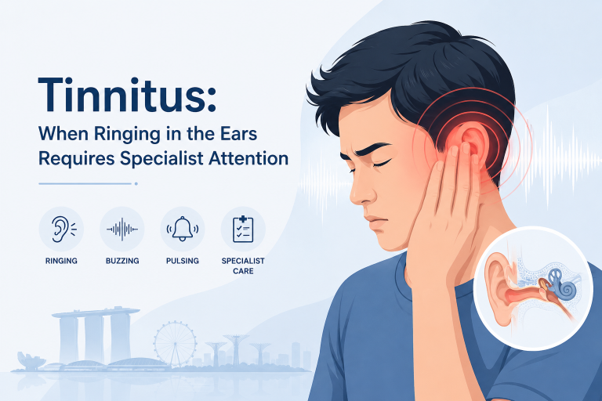
You might first notice a faint ringing in your ears on the way home from a concert, or hear a low hum just as you’re about to fall asleep. Hearing a sound with no obvious source around you is known as tinnitus.
Sometimes it fades within a short time. For others, it keeps returning or lingers long enough to make it harder to sleep, concentrate at work, or unwind at the end of the day.
Tinnitus can occur alongside hearing loss or other ear conditions, so it’s worth paying attention to any changes in your hearing.
This article explains what to look out for when ringing or buzzing persists and when it may be worth arranging a hearing or ENT assessment.
What Is Tinnitus?
Understanding Tinnitus
Tinnitus is the perception of sound when no external sound is present. People often describe it as ringing in the ears, but it can take many different forms.
Tinnitus is not a disease itself. Instead, it is a symptom that may be related to hearing changes, ear conditions, or other underlying health issues.
Some people hear the sound in one ear, while others notice it in both ears. In some cases, the sound seems to come from inside the head rather than the ears.
The Different Sounds People May Hear
Tinnitus can sound different from person to person. Common descriptions include:
- Ringing
- Buzzing
- Humming
- Hissing
- Clicking
- Roaring
- Pulsing sounds that follow the heartbeat
The volume and frequency may also vary. Some people hear it only occasionally, while others notice it throughout the day.
How Common Is Tinnitus?
Tinnitus is a common condition that affects people of all ages. It becomes more common as people get older and is frequently associated with hearing changes.
While many people learn to live comfortably with mild tinnitus, others may find it disruptive enough to affect their quality of life.
What Causes Tinnitus?
Hearing Loss and Age-Related Changes
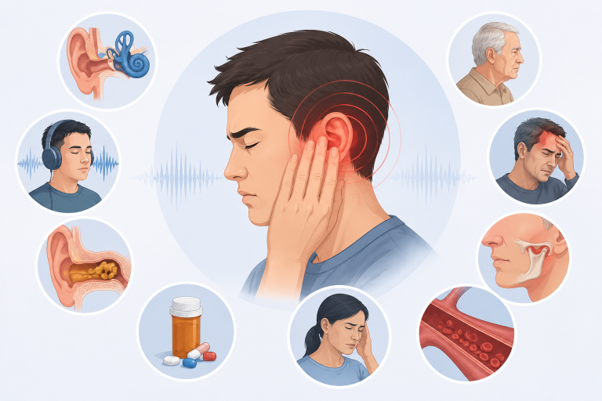
One of the most common causes of tinnitus is hearing loss.
As hearing changes occur over time, the brain may respond by creating sounds that are not actually present. This is why tinnitus and hearing loss often occur together.
Exposure to Loud Noise
Repeated exposure to loud sounds can damage the delicate structures inside the ear.
Common sources include:
- Personal listening devices at high volume
- Concerts and music events
- Industrial workplaces
- Construction sites
- Sudden loud explosions
In some cases, tinnitus develops immediately after noise exposure. In others, it may appear gradually after years of cumulative damage.
Earwax Build-Up
Excessive earwax can block the ear canal and affect how sound reaches the eardrum.
Some people may notice tinnitus becoming more obvious when earwax accumulates. Professional earwax removal may help if blockage is contributing to symptoms.
Ear Infections and Ear Conditions
Ear infections can cause inflammation, pressure changes, and temporary hearing problems.
These changes may trigger tinnitus while the infection is present. Symptoms often improve once the underlying condition has been treated.
Head and Neck Injuries
Injuries involving the head, neck, or ear region can sometimes affect hearing pathways and trigger tinnitus.
The symptoms may appear immediately after the injury or develop later during recovery.
Certain Medicines
Some medicines may contribute to tinnitus in certain individuals.
If symptoms appear after starting a new medication, it is important to discuss this with your doctor. Medicines should never be stopped without professional advice.
Other Medical Conditions
Several other conditions may be associated with tinnitus, including:
- Ménière’s disease
- Jaw joint problems
- Eustachian tube dysfunction
- Certain nerve-related ear conditions
- Blood vessel abnormalities near the ear
Although these causes are less common, they may require specialist assessment.
What Does Tinnitus Feel Like in Everyday Life?
Difficulty Sleeping
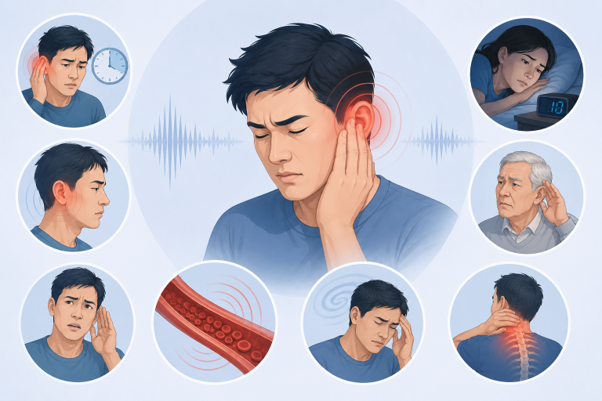
Many people notice tinnitus more at night when the surrounding environment becomes quiet.
The sound may make it harder to fall asleep or cause repeated awakenings throughout the night. Poor sleep can then worsen fatigue and stress during the day.
Problems with Concentration
Persistent ringing or buzzing can become distracting.
Some people struggle to focus during meetings, conversations, reading, or work tasks. Over time, this can affect productivity and daily performance.
Emotional Impact
Living with ongoing tinnitus can be frustrating.
People may feel anxious about their hearing, become easily irritated, or worry that the symptoms will continue indefinitely. When tinnitus becomes severe, it can affect overall well-being and quality of life.
When Is Tinnitus Considered Normal and Temporary?
After Loud Noise Exposure
It is common to experience temporary ringing after spending time in a noisy environment.
The ears may take several hours or even a day or two to recover. If symptoms improve steadily, there is usually less cause for concern.
During a Cold or Ear Infection
Blocked ears caused by colds, allergies, or infections can sometimes lead to temporary tinnitus.
As the congestion or infection improves, the tinnitus often becomes less noticeable.
Knowing When Temporary Becomes Persistent
If tinnitus continues beyond a short recovery period, becomes more noticeable, or starts affecting daily life, it should no longer be considered temporary.
Persistent symptoms deserve further assessment to identify any underlying cause.
Warning Signs That Require Specialist Attention
Tinnitus That Persists for More Than a Few Days or Weeks
Ongoing tinnitus should not be ignored.
Persistent symptoms may indicate hearing loss or another condition that requires medical evaluation.
Sudden Onset of Tinnitus
Tinnitus that appears suddenly deserves prompt attention.
This is especially important if it is accompanied by a sudden change in hearing.
Tinnitus in One Ear Only
Ringing in one ear is often more concerning than tinnitus affecting both ears.
Although many cases are harmless, one-sided symptoms should be assessed by an ENT specialist to rule out less common causes.
Tinnitus Accompanied by Hearing Loss
Difficulty hearing conversations, needing higher television volume, or frequently asking others to repeat themselves may suggest hearing loss.
When tinnitus occurs alongside hearing difficulties, a hearing assessment is often recommended.
Pulsing Sounds That Match Your Heartbeat
Some people hear a rhythmic sound that follows their pulse.
This form of tinnitus may be linked to blood flow around the ear and should be assessed promptly.
Tinnitus with Dizziness or Balance Problems
When tinnitus occurs together with dizziness, vertigo, or balance difficulties, it may indicate an inner ear condition.
Specialist assessment can help determine the cause and appropriate treatment.
Tinnitus Following a Head or Neck Injury
Any persistent tinnitus that develops after trauma should be medically evaluated.
This helps identify whether the injury has affected hearing or ear function.
Tinnitus That Disrupts Daily Life
If tinnitus is affecting sleep, work, relationships, or emotional well-being, seeking professional help is worthwhile.
Treatment may not always eliminate the sound, but it can often reduce its impact.
How an ENT Specialist Investigates Tinnitus
Discussing Your Symptoms and Medical History
The assessment usually begins with a detailed discussion about your symptoms.
Your ENT specialist may ask about:
- When the tinnitus started
- Whether it affects one or both ears
- Noise exposure history
- Current medications
- Associated symptoms such as dizziness or hearing loss
Ear Examination
A physical examination helps identify visible causes such as earwax blockage, infection, or abnormalities within the ear canal.
Hearing Tests
Hearing tests are often an important part of tinnitus evaluation.
These tests can detect hearing loss that may not yet be obvious in everyday situations.
Additional Tests When Needed
Further investigations are only recommended when necessary.
These may include imaging scans or specialised tests, particularly when tinnitus is one-sided, pulsatile, or associated with other concerning symptoms.
Treatment Options for Tinnitus
Treating the Underlying Cause
When a specific cause is identified, treating it may reduce or improve tinnitus.
Examples include:
- Earwax removal
- Treatment of infections
- Managing ear disorders
- Reviewing medications when appropriate
Hearing Aids for Hearing Loss
For individuals with hearing loss, hearing aids may provide significant benefit.
By improving hearing, they often reduce the prominence of tinnitus and improve communication.
Sound Therapy
Sound therapy uses gentle background sounds to reduce awareness of tinnitus.
Examples include:
- White noise
- Soft music
- Nature sounds
- Background sound devices
Many people find this particularly helpful during quiet periods and at bedtime.
Managing Stress and Sleep Difficulties
Stress can make tinnitus seem louder and more bothersome. Improving sleep habits, maintaining regular routines, and practising relaxation techniques may help reduce the impact of symptoms.
Tinnitus Counselling and Support
Education and counselling can help people better understand their condition. Learning coping strategies often reduces distress and improves long-term management.
Practical Self-Care Tips for Living with Tinnitus
Protect Your Hearing
Avoid excessive noise exposure whenever possible. Use hearing protection in loud workplaces or during noisy recreational activities.
Avoid Complete Silence
A completely silent environment often makes tinnitus more noticeable. Gentle background sounds may help make symptoms less intrusive.
Manage Stress Levels
Regular exercise, relaxation techniques, and healthy sleep habits can help reduce the impact of tinnitus.
Monitor Changes in Symptoms
Pay attention to changes in loudness, frequency, or associated symptoms. Seek medical advice if symptoms worsen or new problems develop.
When Should You Book an Appointment with an ENT Specialist?
Situations That Should Prompt Assessment
You should consider seeing an ENT specialist if you experience:
- Persistent tinnitus
- Tinnitus in one ear
- Sudden onset symptoms
- Hearing loss
- Dizziness or balance problems
- Pulsatile tinnitus
- Significant disruption to daily life
Benefits of Early Evaluation
Early assessment can help identify underlying causes before they become more serious.
It also allows patients to access appropriate treatment options and receive guidance on managing symptoms effectively.
Conclusion
Tinnitus is a common symptom that can range from a minor annoyance to a condition that significantly affects quality of life. While temporary ringing may occur after noise exposure or minor illnesses, persistent or unusual tinnitus should never be ignored.
Certain warning signs, including one-sided tinnitus, hearing loss, dizziness, sudden onset symptoms, or heartbeat-like sounds, deserve prompt specialist attention. These symptoms may indicate an underlying condition that requires further investigation.
The good news is that many causes of tinnitus can be identified and managed. Seeking early assessment from an ENT specialist can provide reassurance, protect hearing health, and help you regain control over your daily life.